COMMON INJURIES
Common Injuries and Issues in Ex-Racehorses
Following is a list of some common racehorse injuries, their treatments and prognoses. Bear in mind that these are generalizations and the severity of injury will vary according to each horse. Always have a licensed equine veterinarian evaluate any serious injury or illness to identify the best treatment plan.
Bowed Tendon (a.k.a. Tendonitis)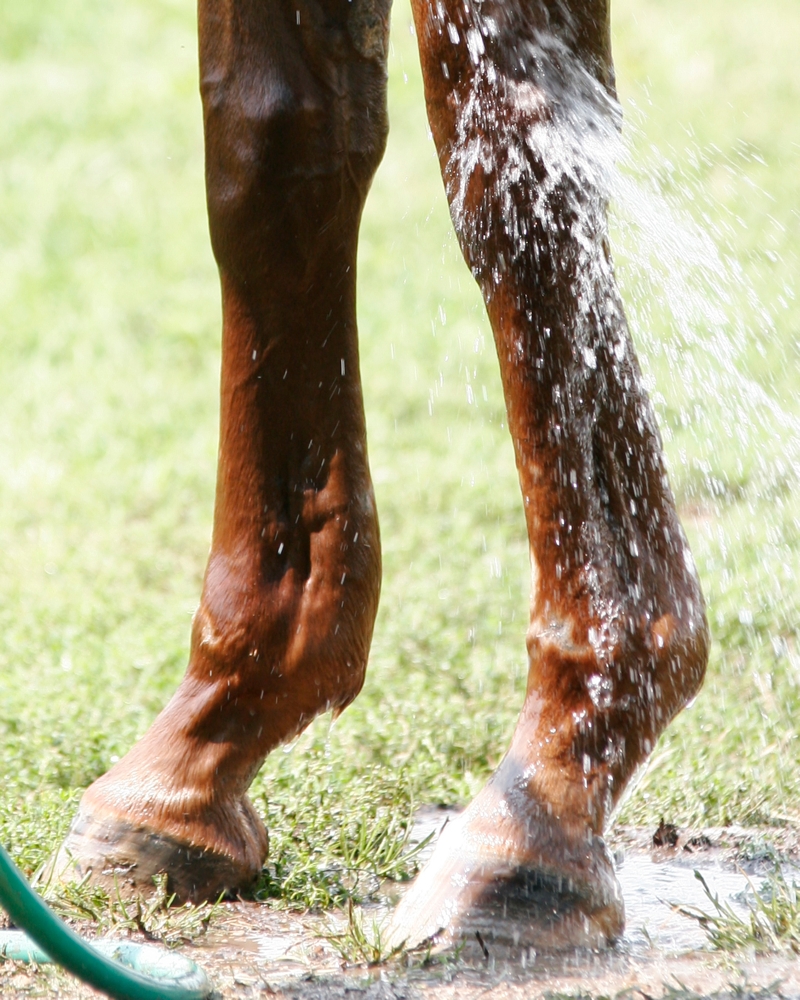
Description: Tendon or tendon sheath inflammation, usually in the superficial digital flexor tendon or sometimes in the deep digital flexor tendon. Damage to the tendon can range from slight to severe depending on if and how much of the structure is torn.
Cause: Strain due to deep footing, fatigue, low heels and long toes, hyper-extension or improper training.
Treatment: Stall rest, support wraps, cold packs, water therapy, and anti-inflammatory drugs. In some cases, veterinarians recommend surgery.
Prognosis: Depends on severity and treatment. Usually stall rest followed by turn out is required for nine months to a year, depending on the injury’s severity. Minor tears in the tendon sheath may heal after only one to three months of rest. Your veterinarian should check the tendon with ultrasound before the horse returns to work.
New Vocations Graduates Who Sustained This Injury While Racing
Coolgun Run
- Breed: Thoroughbred
- Age: 2010
- Race Starts: Unraced, but in race training
- Last Race: N/A
- Date of Injury: 2012
- Total Rehab Time: Bowed right front tendon in 2012 and was fully rehabbed prior to entering New Vocations’ program in July 2013.
- Date Adopted: 8/18/13
- Current Discipline: Dressage, Hunter/Jumpers
- Comments: Coolgun Run now successfully competes in dressage and hunter/jumper shows. His adopter took his jumping training slowly and primarily focused on dressage until he fully matured. A veterinarian cleared him to for work in all disciplines.
Native Tongue
- Breed: Thoroughbred
- Age: 2004
- Race Starts: 23
- Last Race: 3/30/10
- Date of Injuries: 2007 and 2010
- Total Rehab Time: First bowed left front tendon in 2007, was fully rehabbed and returned to racing. Re-bowed same tendon in 2010. His connections retired him from racing and fully rehabbed his injury prior to sending him to New Vocations in August 2011.
- Date Adopted: 2/19/12
- Current Discipline: A Rated Hunter/Jumpers (3’3″ foot)
- Comments: Passed over by adopters for six months due to his double bow and 15.3 height, Native Tongue finally found his adopter and second career as a hunter/jumper. He has successfully competed on the A & AA Rated Hunter Circuit in California.
Battle Hard
- Breed: Thoroughbred
- Age: 2009
- Race Starts: 5
- Last Race: 9/6/12
- Date of Injury: 2012
- Total Rehab Time: Bowed left front tendon in September 2012 and was fully rehabbed prior to entering New Vocations’ program in August 2013.
- Date Adopted: 9/7/13
- Current Discipline: Dressage
- Comments: Battle Hard was adopted by a USDF Bronze and Silver Medalist who saw his potential to be an upper level Dressage competitor. After adoption he entered active training at a top-level Dressage show barn in Georgia.
Strained Suspensory Ligament
Description: A strain of the suspensory ligament, which supports the fetlock and protects it from hyperextension (i.e. dropping too low) during exercise.
Cause: Strain from working in deep footing, fatigue, low heels and long toes, hyperextension or improper training.
Treatment: Stall rest, cold hosing to reduce inflammation, stable bandages for support, and anti-inflammatory drugs. Extra-corporeal shockwave therapy (ESWT) can also be helpful.
Prognosis: In severe cases a horse can damage both the digital flexor tendon and suspensory ligaments. Severe suspensory injuries can require a year of rehab and result in the horse only being suitable for light pleasure riding. Minor strains, tears or lesions in the suspensory can be successfully rehabilitated in three to nine months depending on the injury’s severity. Once healed most horses are able to return to racing or most types of riding.
New Vocations Graduates Who Sustained This Injury While Racing
Saratoga Steve
- Breed: Thoroughbred
- Age: 2006
- Race Starts: 20
- Last Race: 7/29/11
- Date of Injury: 2011
- Total Rehab Time: Sustained a strained suspensory in 2011 and was fully rehabbed at New Vocations before starting his under saddle retraining in the program and being adopted later that year.
- Date Adopted: 10/17/11
- Current Discipline: Hunter/Jumpers
- Comments: Saratoga Steve now successfully competes in the 3’ and up hunter/jumper show ring. He is a highly athletic and talented jumper and, because his adopter took the time to bring him along slowly in his jump training, Saratoga Steve will have no limitations in his future. Veterinarians have cleared him to work in all disciplines.
Bindle Stick
- Breed: Thoroughbred
- Age: 2006
- Race Starts: 40
- Last Race: 5/13/12
- Date of Injury: 2012
- Total Rehab Time: Sustained a strained suspensory to his right hind leg in 2012 and was fully rehabbed at New Vocations before starting his under saddle retraining and being adopted in early 2013.
- Date Adopted: 1/17/13
- Current Discipline: Hunter/Jumpers
- Comments: Bindle Stick now successfully competes with his young adopter in the 3’6″ hunter/jumper show ring. He has a bright and athletic future ahead of him because his adopter took the time to bring him along correctly and slowly in his jump training. Veterinarians have cleared him to work in all disciplines.
Splints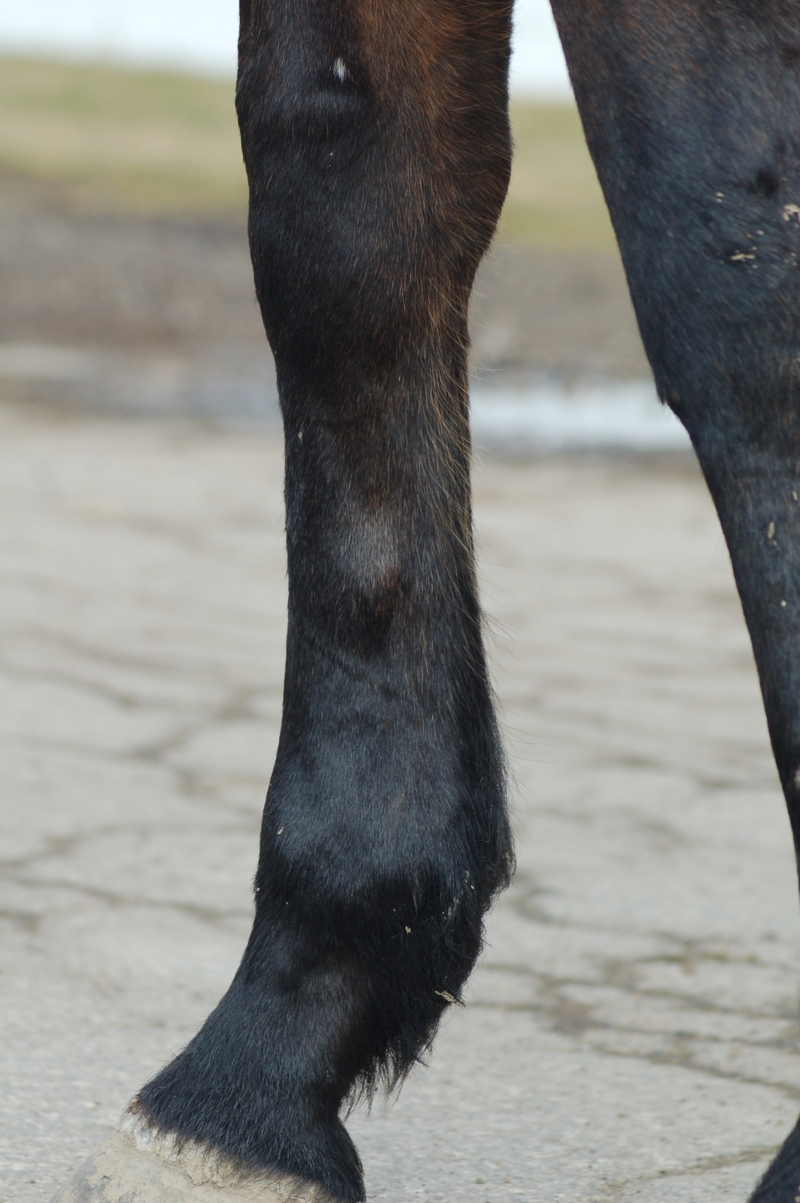
Description: A bony enlargement that forms on the splint and/or cannon bones.
Cause: Concussion, conformation, strain, a blow to the leg or nutritional deficiency.
Treatment: Rest, cold-hosing, and anti-inflammatory drugs. ESWT can also benefit some splints.
Prognosis: Once healed, most splints are cosmetic blemishes that will not affect the horse’s soundness. Racehorses commonly develop splints early in their training and rarely do splints prevent a horse from racing.
New Vocations Graduates Who Sustained This Injury While Racing
Monty Bajo
- Breed: Thoroughbred
- Age: 2004
- Race Starts: 34
- Last Race: 8/20/11
- Date of Injury: 2011
- Total Rehab Time: Sustained fractures to both splint bones in his right front leg in the summer of 2011. He was fully rehabbed at the New Vocations facility prior to entering the retraining program and being adopted in early 2012.
- Date Adopted: 3/23/12
- Current Discipline: Hunter/Jumper
- Comments: Monte Bajo was passed over by many adopters who were not willing to deal with his injury which had fully healed and would pose no consequence in his next career. Luckily, his ultimate adopter was willing to give him a chance and was familiar with this type of injury and knew that it would not limit his ability to be successful in his second career. Monte Bajo now competes successfully as a 3’+ hunter.
Osselets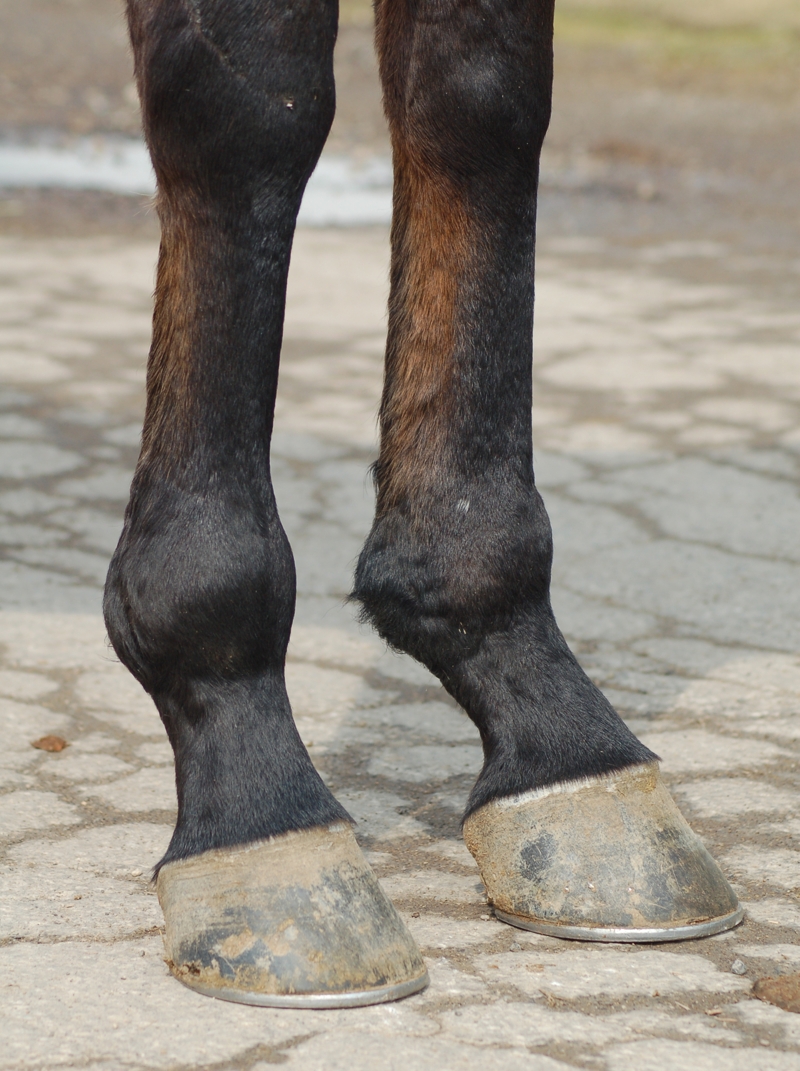
Description: Calcium buildups in the fetlocks (usually the front ones) caused by joint capsule stretching and inflammation.
Cause: Concussion and stress from racing and training. Short, upright pasterns are more prone to concussion and, thus, osselets.
Treatment: Rest, cold hosing and anti-inflammatory drugs.
Prognosis: Once calcified, most osselets are not painful. If minimal calcification develops outside the joint (not within it) the horse should be able to return to a normal workload. In severe cases, related arthritis will ultimately limit fetlock flexion and the horse might only be suitable for limited performance or pleasure riding.
New Vocations Graduates Who Sustained This Injury While Racing
Najeeb T.M.D.
- Breed: Thoroughbred
- Age: 2008
- Race Starts: 8
- Last Race: 9/1/12
- Date of Injury: 2012
- Total Rehab Time: Developed an osselet to the left front fetlock in the fall of 2012 and was fully rehabbed while at New Vocations before entering the retraining program and being adopted in early 2013.
- Date Adopted: 3/24/13
- Current Discipline: Eventing
- Comments: Najeeb T.M.D. is an athletic and talented horse who is excelling on the cross-country course and in the show ring. He thoroughly enjoys his second career as an eventing partner with his adopter. Because he was given the time and proper care for his osselet to heal fully, he has a long, bright career ahead of him.
Soxandthecity
- Breed: Thoroughbred
- Age: 2004
- Race Starts: 5
- Last Race: 1/14/08
- Date of Injury: 2008
- Total Rehab Time: Developed osselets in both front fetlocks in early 2008 and finished rehabbing while at the New Vocations facility prior to entering the retraining program and being adopted in the spring.
- Date Adopted: 3/3/08
- Current Discipline: A-Rated Hunter/Jumper
- Comments: Soxandthecity has proven to be a highly athletic and talented show jumper competing in the A-rated hunter rings across the United States. He impresses all who meet him especially when they find out that he was a former racehorse who retired due to osselets in both front fetlocks. His adopter gave extra time and proper care for his osselets to heal fully and, therefore, he has a long, exciting show career to look forward to.
Sesamoid Fractures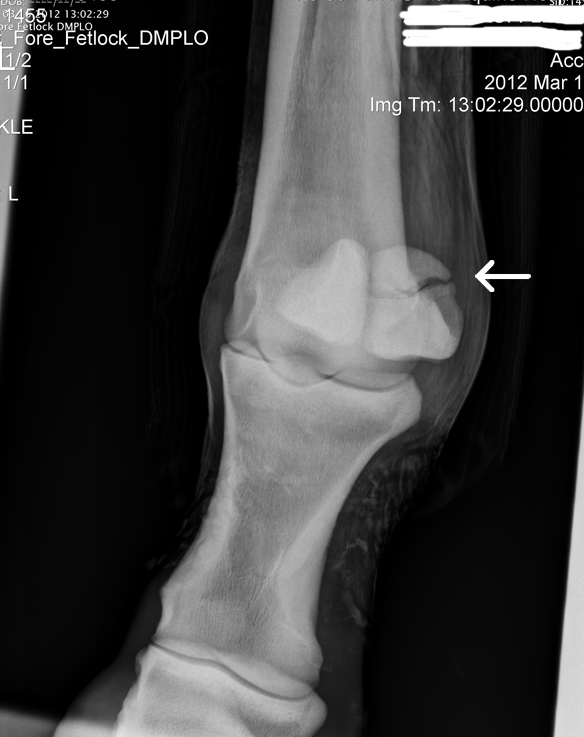
Description: A fracture of the sesamoid bone(s) at the back of the fetlock joint.
Cause: Often occur at the end of a race or work-out when the horse is fatigued.
Treatment: Depends on the location of the fracture. Fractures or chips at the top of the sesamoids are easiest to repair surgically. Some of these cases can return to a moderate riding career without surgery. Middle fractures normally need to be repaired with a screw. A fracture or chip at the bottom of the sesamoid is the worst and has the poorest prognosis for soundness.
Prognosis: Poor circulation to the sesamoids impedes healing. The suspensory ligament attaches to these bones and is often involved in the injury. The prognosis depends on the location of the fracture and amount of suspensory ligament damage. With or without surgery, affected horses’ futures could be limited to lower level disciplines, however, some have returned to work without any limitations.
New Vocations Graduates Who Sustained This Injury While Racing
Rooster and Rudy
- Breed: Thoroughbred
- Age: 2010
- Race Starts: Unraced, but in race training
- Last Race: N/A
- Date of Injury: 2012
- Total Rehab Time: Sustained sesamoid fracture in the left hind leg in spring 2012 and was fully rehabbed while at the New Vocations facility prior to entering the retraining program and being adopted in summer 2012.
- Date Adopted: 7/10/12
- Current Discipline: Hunter/Jumper
- Comments: Rooster and Rudy was given plenty of time off to heal and was started back under saddle slowly and correctly. As a result, he’s now able to have a bright, second career beyond the track and is currently excelling in the hunter ring with his current adopter.
Condylar Fractures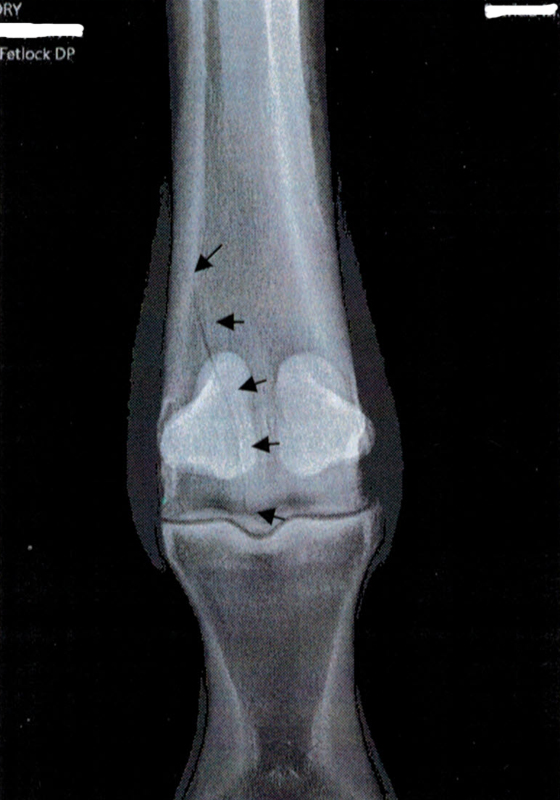
Description: Slab fracture of the lower end of the cannon bone.
Cause: Stress accumulation on the weight bearing cannon bone resulting in microdamage. If microdamage accumulates too fast for the bone to repair itself, a complete fracture occurs.
Treatment: Support bandages, anti-inflammatory drugs, stall rest for 30-60 days and 3-4 months off from work, depending on the fracture’s severity. Veterinarians can place screws in the bone to compress it together, which typically hastens the recovery and often improves the fetlock strength. Veterinarians would remove any small bone fragments found in the limb at this time.
Prognosis: Depending on the location and severity of the fracture, some horses have been rehabbed following surgery and returned to racing. More severe cases are likely to be able to resume work a reduced load.
New Vocations Graduates Who Sustained This Injury While Racing
War Glory
- Breed: Thoroughbred
- Age: 2010
- Race Starts: 2
- Last Race: 11/9/13
- Date of Injury: 2013
- Total Rehab Time: Sustained a nondisplaced lateral condylar fracture of the left front cannon bone in the fall of 2013 as well as P-1 (pastern) chip fracture. Had surgery to insert two screws into the cannon bone and remove the chip. The surgeon deemed the prognosis for the horse to return to racing was favorable. However, the owners decided to retire him and send him to New Vocations for a chance at a second career. War Glory completed his rehabbing at New Vocations prior to entering the retraining program and being adopted the next spring.
- Date Adopted: 5/18/14
- Current Discipline: Hunter/Jumper
- Comments: War Glory is a natural athlete who is brave and showed a talent for jumping. He thoroughly enjoys his second career as a hunter/jumper partner with his adopter and because he was given the time and proper care for his fracture to heal fully, he has a long, bright career ahead of him.
Knee Fractures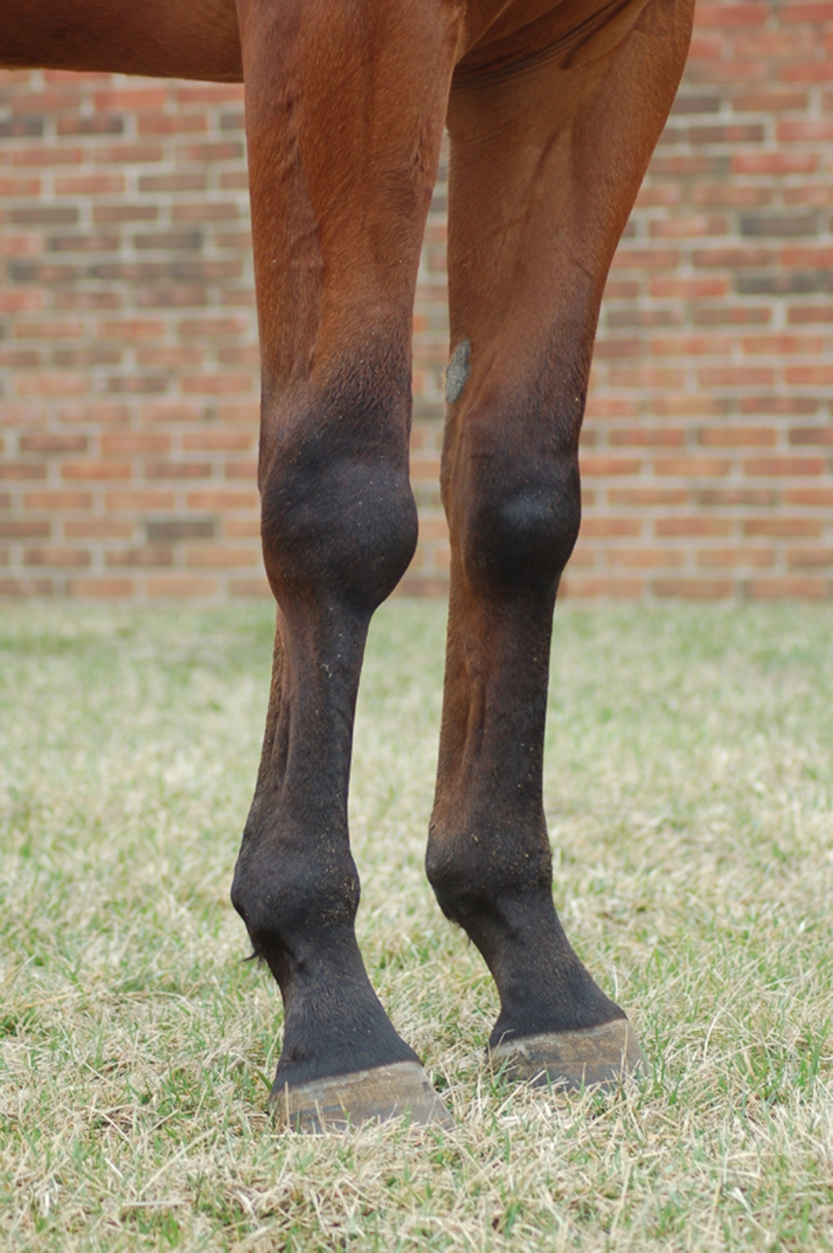
Description: A fracture in the knee, most commonly in the third carpal bone.
Cause: Hyper-extension resulting from fatigue or poor confirmation.
Treatment: Usually surgery and rest.
Prognosis: Affected horses are likely to resume work at a reduced load. Eventually, arthritic changes in the joint can reduce flexibility and limit how much work the horse can tolerate.
Bone Chips (Knee or Fetlock)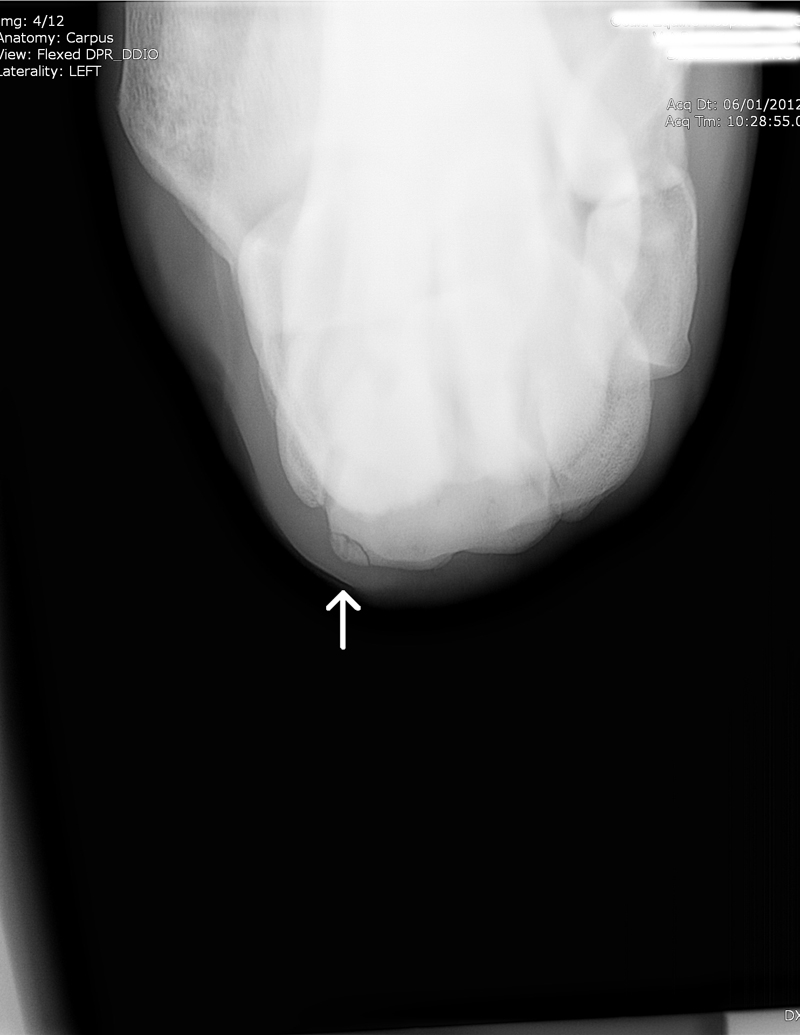
Description: A chip of bone that fractures and may or may not separate from the surface of the bone.
Cause: Stress to the joint due to training or conformation.
Treatment: Surgical removal and/or rest, depending on whether chip is attached or detached.
Prognosis: Many bone chips cause soreness and wear away at the cartilage in the joint. Bone chips should be removed as early as possible to minimize the damage they cause. If the chip is removed and there is not too much arthritis or cartilage damage, most horses are able to return to some level of work.
New Vocations Graduates Who Sustained This Injury While Racing
Roman Thunder
- Breed: Thoroughbred
- Age: 2008
- Race Starts: 1
- Last Race: 6/29/11
- Date of Injury: 2011
- Total Rehab Time: Sustained knee fracture to right front knee; knee chips developed subsequently. A veterinarian removed the chips and he completed his rehab in New Vocations’ program after being donated in the fall of 2011.
- Date Adopted: 5/26/12
- Current Discipline: Eventing
- Comments: Roman Thunder was adopted by a professional trainer who had previous experience with how to bring him along slowly and correctly in his second career as a low-level eventer. He is closely monitored to ensure that the knee remains in good, stable condition. Follow up x-rays revealed that there was very minimal arthritis which, most importantly, wasn’t located in the joint. The vet cleared Roman Thunder for jumping and he’s now thoroughly enjoying his new career in beginner novice eventing, happy to show off his natural jumping talent and bravery in the show ring and on the cross-country course.
Angel’s Tune
- Breed: Thoroughbred
- Age: 2009
- Race Starts: 11
- Last Race: 5/11/13
- Date of Injury: 2012
- Total Rehab Time: Had knee chips surgically removed from both knees in early spring 2012 and, after being fully rehabbed and cleared by the veterinarian, returned to racing before his connections retired him due to a lack of competitiveness at the upper-level racetracks. Angel’s Tune came to New Vocations a few weeks after running his last race.
- Date Adopted: 6/20/13
- Current Discipline: Hunter/Jumpers
- Comments: Veterinarians cleared Angel’s Tune for jumping and work in any discipline. Due to his laid-back attitude and sweepy movement, his adopter selected him as a hunter prospect. Angel’s Tune now successfully competes in the hunter ring, always placing in the ribbons and impressing the judges.
Bucked Shins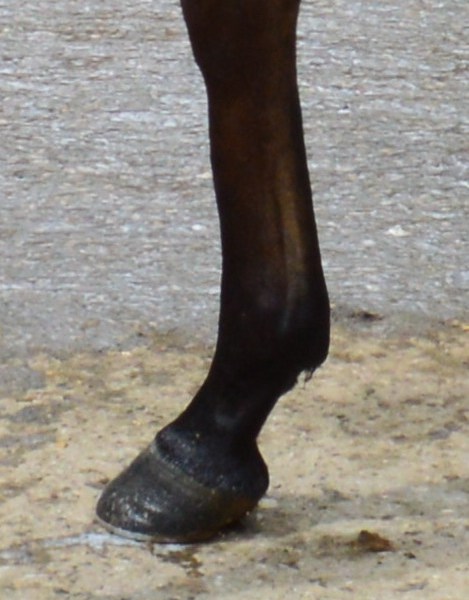
Description: Bucked shins are an inflammation of the tissue covering the cannon bones and often occur in young horses in early training.
Cause: Usually concussion on immature legs.
Treatment: Rest, cold hosing and anti-inflammatory drugs. ESWT has proven very beneficial for use on bucked shins. Many track veterinarians now use ESWT as it appears to help bucked shins heal quicker and more completely.
Prognosis: Once the inflammation has subsided the horse should be able to return to training and eventually competing.
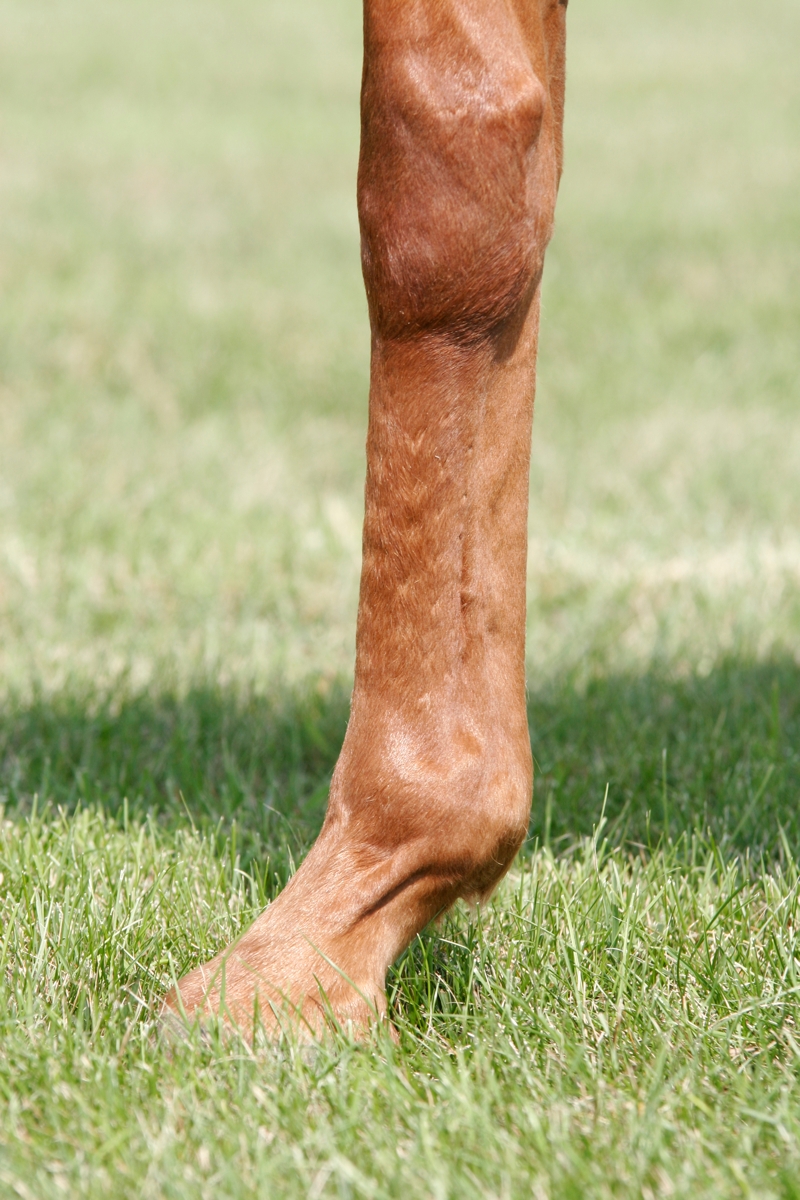 A Word on Pinfiring
It is not unusual for an OTTB to have small dot-like scars running up and down his cannon bones in several rows. These scars are the result of a procedure called pinfiring. Though some people shy away from horses that have been pinfired, there are rarely long-term negative effects. By the time the scar forms, the injury should have healed and is nulikely to reoccur.
Pinfiring is sometimes used on injuries such as splints, bucked shins, curbs or chronic bowed tendons. It is performed with a small, hot probe that burns the tissue of the injured or sore area. The purpose is to increase blood flow to the affected area which promotes healing by ridding the injury of inflammation. Usually, once the treated area heals it is no longer sore and the horse can return to work.
Though pinfiring has fallen out of favor with some people, others still use it as an inexpensive treatment for bucked shins and curb. Be assured that firing will not adversely affect the horse’s future performance—the only negative long-term effects it has are the scarring it leaves behind and any complications from the original injury.
Hoof Issues
The hoof is the most obvious place to check for a problem if no heat or swelling is apparent in the horse’s leg. Thoroughbreds tend to have sensitive feet with thin walls and soles, making them more prone to hoof problems than some breeds. Problems are exacerbated by the way some farriers at the track tend to take off too much sole and trim the heels too low, making horses more susceptible to stone bruises, heel bruises and hoof abscesses.
Hoof testers (large calipers used to grasp the outer wall and put pressure on the sole) are a simple way to check for sensitivity in the foot. If there is a bruise the horse will react to pressure on the affected area by flinching and pulling his hoof away. Check the entire hoof with the testers, including the heels. The can bruise his sole when he steps on a stone or other hard object or a bruise can be the result of a badly fitting shoe. Toughening up the sole will help prevent bruises and can be achieved by painting the bottom of the foot with Venice Turpentine, Iodine or an off-the-shelf “hoof freeze.” Do not soak a bruised sole as it will only soften and weaken the hoof.
Abscess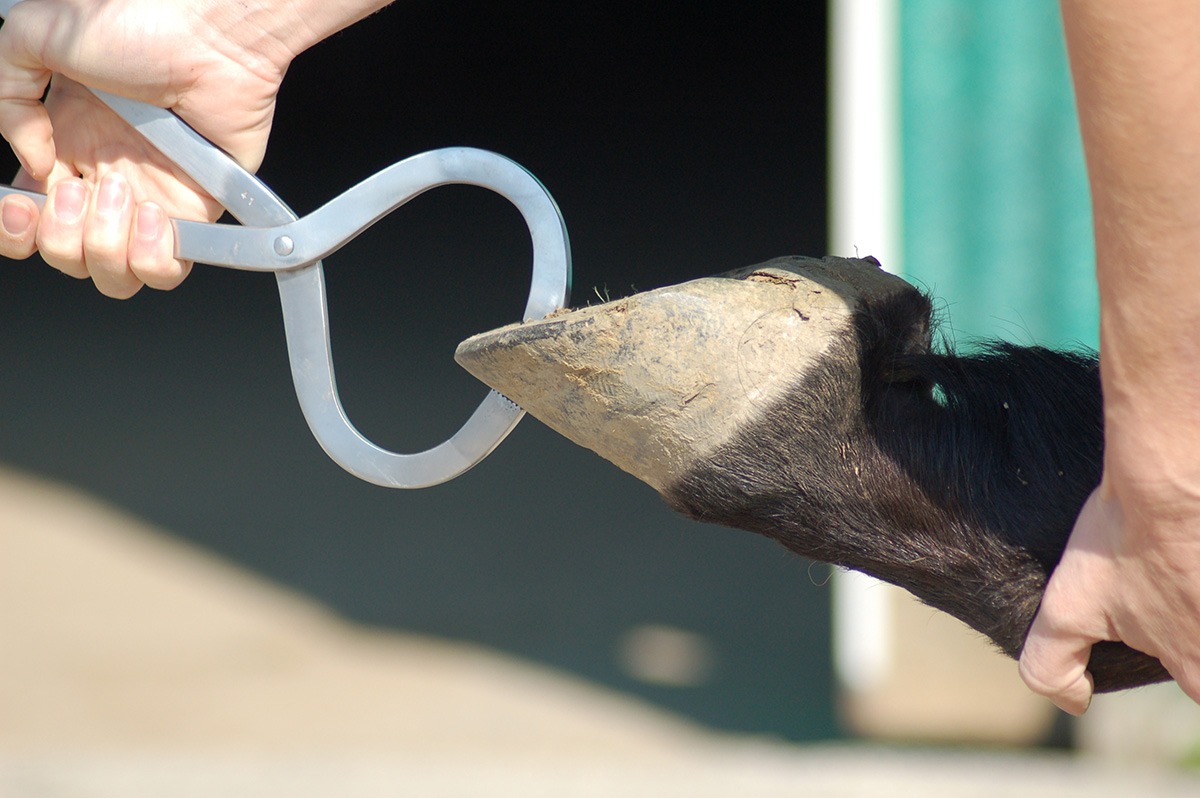
Occasionally a foreign object will work its way into the white line that attaches the sole to the wall of the hoof or the horse will step on an object and develop an abscess (an infection in the hoof). Soaking the hoof daily with warm water and Epsom salts can help the abscess work its way out, as can packing the hoof with ichthammol ointment. The farrier might also be able to dig out the infection with a hoof knife. Sometimes an abscess will work its way up the hoof and erupt at the coronary band; this is commonly referred to as a “gravel.” Usually lameness resolves when the gravel bursts.
Quarter Crack
Quarter cracks are another common affliction of racehorses’ feet. Most cracks only penetrate the surface of the wall and do not cause lameness, but they can go deeper or travel all the way up the hoof and into the coronary band and ultimately cause major problems. Quarter cracks are located about a quarter of the way around the hoof from the heel, where a great deal of stress is placed on the hoof. (The same sort of crack, anywhere other than on the quarter, is a “sand crack. These can also cause problems if deep.) With time, correct farrier care and a lighter workload the crack will eventually grow out and the new hoof wall will actually be thicker and stronger. The horse should not have long-term soundness issues from a quarter crack.